


How to Pack School Lunches Without Plastic
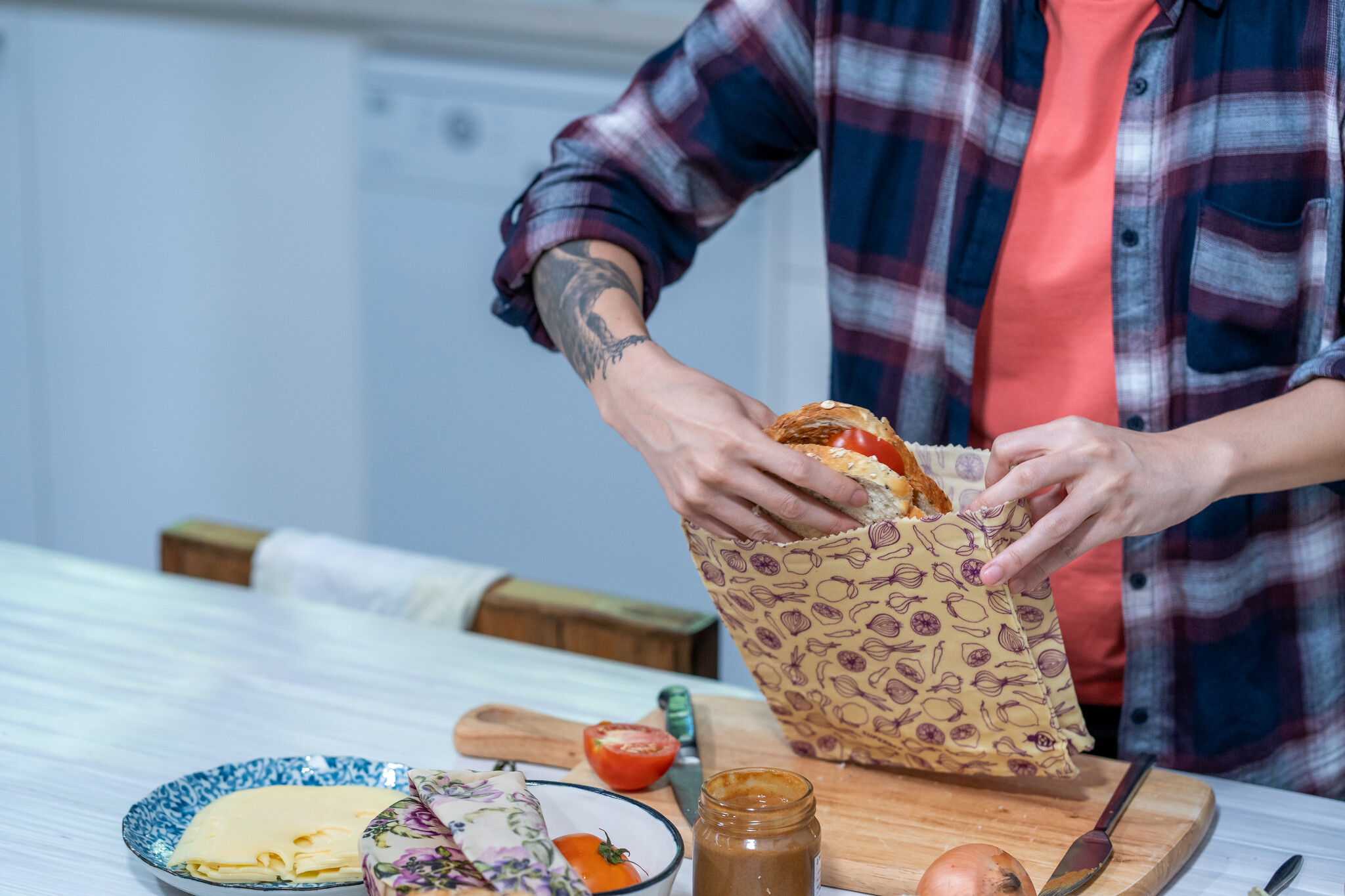
If you’ve ever peeled a strip of cling film off a sandwich, balled it up, and dropped it in the bin — then done exactly the same thing tomorrow, and the day after — you already know the quiet problem with school lunches. It’s not one big pile of waste. It’s a small handful, five days a week, times however many years your children are at school. It adds up to something enormous without ever feeling like much at all.
The good news is that packing a plastic-free lunch is genuinely easy once you’ve made a few swaps. You don’t need a Pinterest-perfect bento box or an hour of prep the night before. You need a small kit of reusable pieces, a couple of habits, and a bit of permission to keep it simple. Here’s how we do it — and how thousands of SuperBee families do it too.
Why bother going plastic-free at lunchtime?
A quick, honest reason before the how-to, because it helps the habit stick.
Most of the plastic wrap in a lunchbox can’t be recycled at all. Thin plastic films like cling wrap aren’t accepted in most kerbside recycling programs, so they head straight to landfill (or worse, into the environment) after a single use (Earth911). Sandwich bags and snap-lock bags are much the same story. One lunch’s worth is nothing; a school year’s worth per child is a bin bag you never see.
There’s a food angle too. Roughly a third of all the food produced in the world is lost or wasted (FAO / UN) — and a surprising slice of household waste is simply food that spoiled or got squashed before anyone ate it. Better packaging that actually keeps food fresh and intact means fewer half-eaten lunches coming home in the bag. Plastic-free, it turns out, is often less waste in every sense.
The plastic-free lunch kit (this is the whole secret)
You don’t reinvent lunch every morning. You build a small kit once, and then you just refill it. Here’s what earns its place:


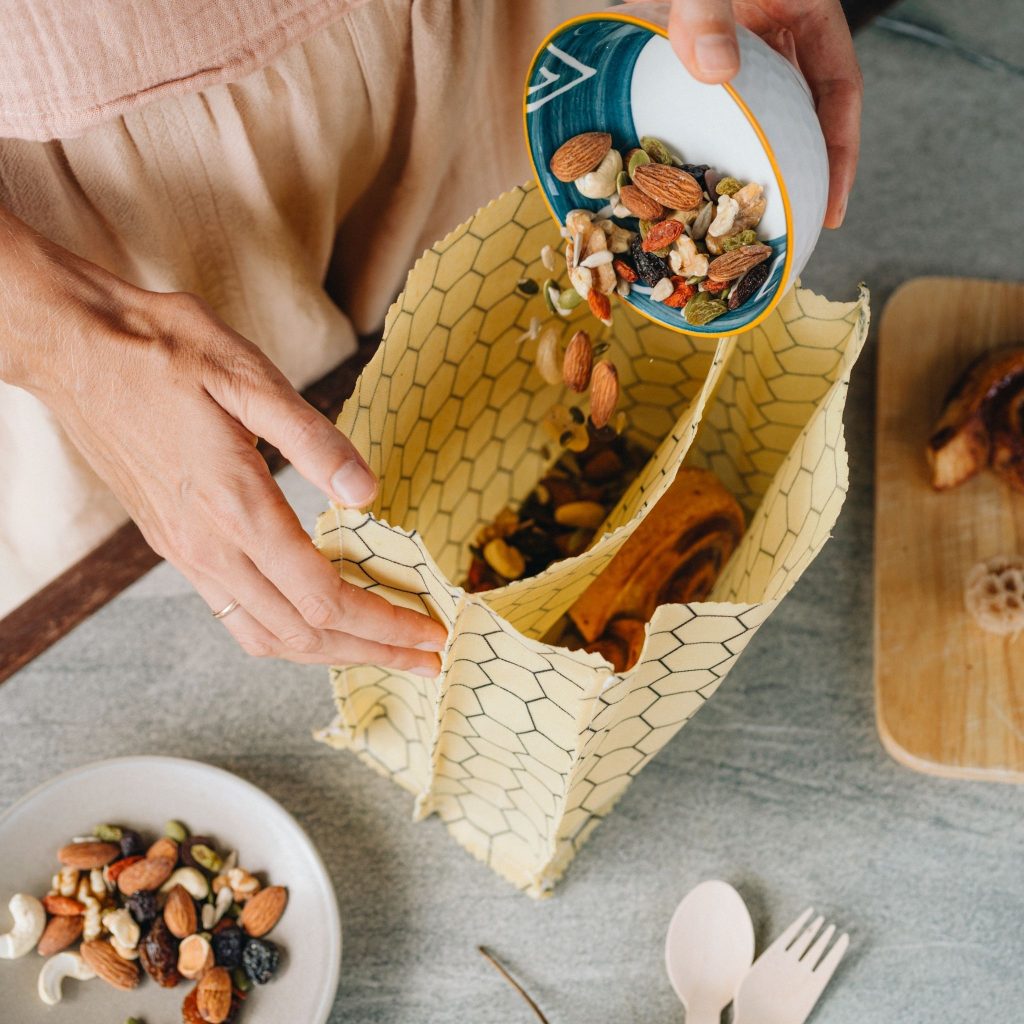

1. A reusable sandwich bag. This is the workhorse. Our reusable waxed sandwich bags are made from GOTS-certified organic cotton lined with beeswax, so they hold a sandwich, a wrap, a cut bagel or a handful of crackers, wipe clean with cool water, and are ready again the next day. With proper care they last for years — a plastic-free stand-in for the paper sacks and zip-lock bags that get used once and tossed.
2. A couple of beeswax wraps. Wraps are the flexible players. Warm one in your hands, press it around half an apple, a wedge of cheese, a muffin, or over the top of a little bowl, and the wax makes a gentle self-seal. A beeswax wrap starter set in small, medium and large covers almost everything a lunchbox throws at you. If you’re kitting out several children at once, the mixed-design Essentials wraps are the budget-friendly way to buy in bulk.
3. One bigger bag for the “everything else.” Crackers, veg sticks, a slice of banana bread, a spare snack for the walk home. A large waxed food bag doubles as the catch-all — and on baking weekends it moonlights as a bread bag or a farmers’-market produce bag. (More on keeping bread fresh in a moment.)
That’s it. Bag, wraps, big bag. Everything else you probably already own.
What actually goes in it
Plastic-free doesn’t mean fussy. Here’s a week of easy, kid-approved lunches that need zero single-use anything:
- Sandwich or wrap tucked into the waxed sandwich bag — cut in halves or fingers for little hands.
- Fruit that survives a backpack: apple slices (a wrap keeps them from browning), grapes, mandarin segments, berries in a small lidded pot.
- Snacky bits: cheese cubes, crackers, veg sticks with a little hummus, a homemade muffin — each in its own wrap or the big bag.
- Something to look forward to: a couple of squares of dark chocolate, a few dried apricots. The treat is what gets the box actually opened at lunchtime.
A tip from years of doing this: let the wrap patterns become the fun part. Kids are far more likely to bring an empty box home when the wrap has a bee or a bright print on it rather than a sad, damp square of plastic.
The one habit that makes it effortless
Here’s where most good intentions quietly fall apart — the washing-up. So keep it stupidly simple.
At the end of the day, everything gets a wipe or a rinse in cool water with a little eco-friendly dish soap, then hangs to air-dry by the sink. That’s the whole routine. The only real rule with beeswax: no hot water and no dishwasher, because heat melts the wax. Warm hands to seal, cool water to clean. If you can get the children to rinse their own bag as they unpack the box, even better — it becomes their job, not yours.
Store the clean, dry wraps flat in a drawer with the tea towels, and the kit is ready to load again in the morning. Prep time: about ninety seconds.
A few gentle realities
To keep this warm and honest, three things worth knowing:
- Beeswax wraps aren’t for raw meat or fish, and they don’t go in the microwave or oven. For lunchboxes that’s a non-issue — but good to know.
- They’re not single-use, and they’re not indestructible either. Treated kindly, wraps last around two years and bags even longer; when a wrap finally tires out, it’s home-compostable, which is a lovely full stop that plastic never gets.
- You don’t have to do everything at once. Swap the sandwich bag first. Add wraps next term. A plastic-free lunch built one habit at a time is the kind that lasts.
Beyond the lunchbox
Once the lunch kit clicks, the same pieces start quietly solving other jobs at home — covering the leftover half of dinner, keeping a loaf fresh, wrapping the block of cheddar in the fridge door. If cheese is the thing that always seems to sweat, dry out or go mouldy in plastic, have a read of our companion guide on how to store cheese without plastic — it’s the same simple idea, applied to the one food plastic treats worst.
And if you’d rather just see the whole range in one place, browse the full SuperBee shop and build the kit that fits your family.
Packing lunch without plastic isn’t a project. It’s a bag, a couple of wraps, and a rinse at the sink — repeated until it’s just how your kitchen works. Your children get a brighter box, you get a lighter bin, and the planet gets a small, daily kindness that really does add up.
You need a small kit of reusable pieces, a couple of habits, and a bit of permission to keep it simple. Here's how we do it — and how thousands of SuperBee families do it too.